
Many employers choose a contingency recruiting firm because it seems like the safest option—after all, you only pay if a hire is made.
On the surface, that sounds like a win.
However, the contingency recruiting model often creates challenges that aren't immediately obvious. While it can work well for certain positions, many employers discover the process can become expensive, inefficient, and surprisingly transactional.
What Is Contingency Recruiting?
A contingency recruiting firm is paid only if their candidate is hired. Because there is no upfront commitment, employers often engage multiple recruiting agencies simultaneously in hopes of increasing the chances of filling a position quickly.
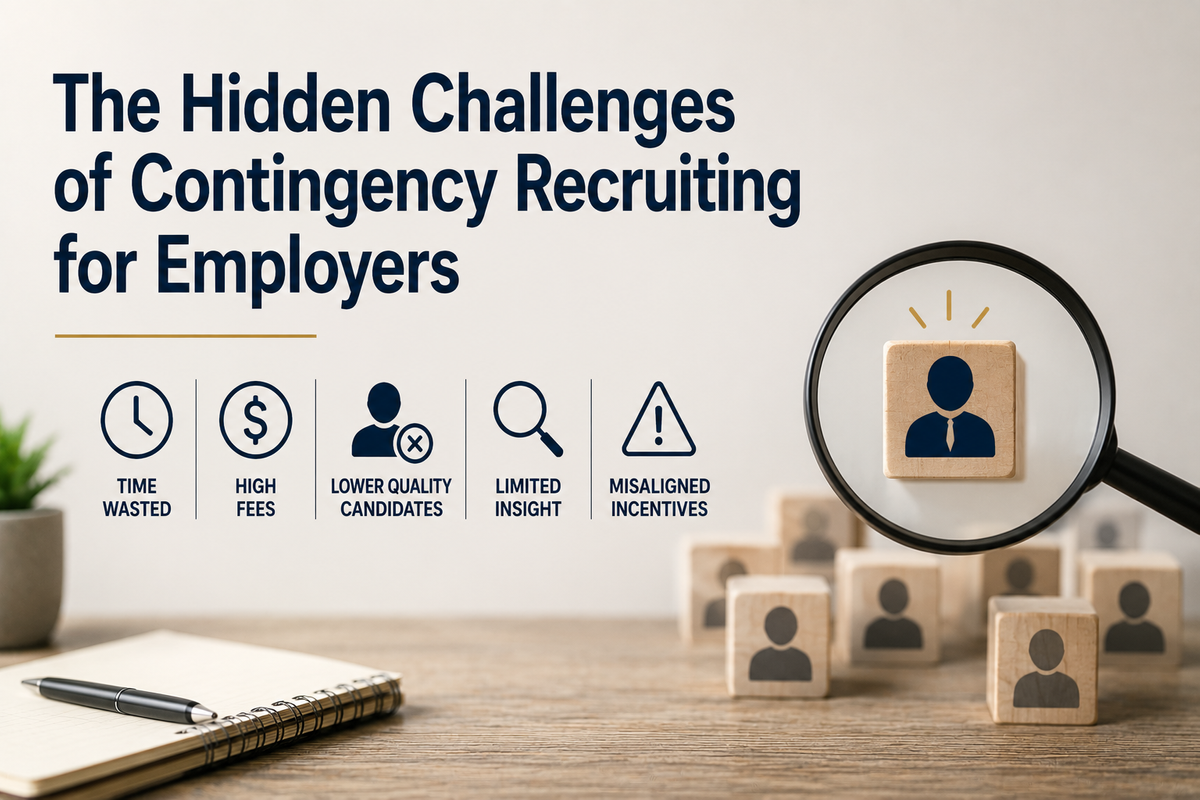
While this approach may seem low risk, the structure of the model creates incentives that don't always align with an employer's long-term hiring goals.
The Race to Be First
When multiple agencies compete to fill the same position, success often depends on who submits a candidate first—not necessarily who finds the best long-term fit.
Industry experts note that contingency searches can prioritize speed over depth, leading to less thorough candidate evaluation and more emphasis on submitting resumes quickly.
Common Challenges Employers Experience
Quantity Instead of Quality
Many employers receive dozens of resumes but spend valuable time sorting through candidates who don't fully meet the position's requirements.
Because recruiters only earn a fee after a placement, the pressure to move quickly can sometimes outweigh the time needed for comprehensive screening and market research.
Recruiters May Shift Their Focus
Contingency recruiters often manage many open searches at once.
If another position appears easier to fill or offers a greater chance of success, recruiting effort may naturally shift toward that opportunity. Hard-to-fill positions can receive less attention because there is no guarantee of payment for the work invested.
Duplicate Candidate Submissions
When multiple recruiting agencies work on the same search, employers frequently receive the same candidate from different firms.
This creates administrative work, ownership disputes, and a confusing experience for candidates.
Limited Market Intelligence
Many contingency engagements focus on delivering resumes rather than providing broader hiring insights.
Employers may receive little information about compensation trends, candidate availability, interview feedback, or employer branding—data that can improve future hiring decisions.
High Placement Fees
Traditional contingency recruiting fees commonly range between 15% and 25% of a new hire's first-year salary, with higher percentages for specialized positions. For leadership or technical roles, that can represent tens of thousands of dollars for a single hire.
Why More Employers Are Looking for Different Recruiting Models
Today's hiring market is changing.
Companies want more transparency, better communication, and recruiting partners who become an extension of their business—not simply vendors competing to make the next placement.
That shift has fueled growing interest in alternative recruiting models, including Fractional Recruiting.
A Partnership Instead of a Placement Fee
At On The Hook Recruiting, we've built our Fractional Recruiter service around a different philosophy.
Rather than charging a large percentage of a candidate's salary, we work alongside your hiring team using an hourly model that is capped at 15% of first-year salary—and many searches finish well below that cap.
Our clients receive more than resumes.
They receive:
Dedicated recruiting support
Candidate market intelligence
Compensation guidance
Interview coordination
Hiring strategy
Complete transparency throughout the search
Ownership of the recruiting process and candidate pipeline
Choosing the Right Recruiting Partner
Every recruiting model has situations where it can be effective.
For employers hiring one occasional position, contingency recruiting may still make sense.
However, companies hiring multiple positions, difficult-to-fill roles, or specialized talent often benefit from a recruiting partner whose incentives are aligned with delivering the best long-term hiring outcome—not simply the fastest placement.
The right recruiting partner shouldn't just help you fill today's opening.
They should help you build a stronger hiring strategy for tomorrow.
_____________________________________________________________________________
Are you struggling to hire? Our Fractional Recruiter Service is the answer.
You can see how much you will save here: Cost Calculator
Check out our FAQ Here.