
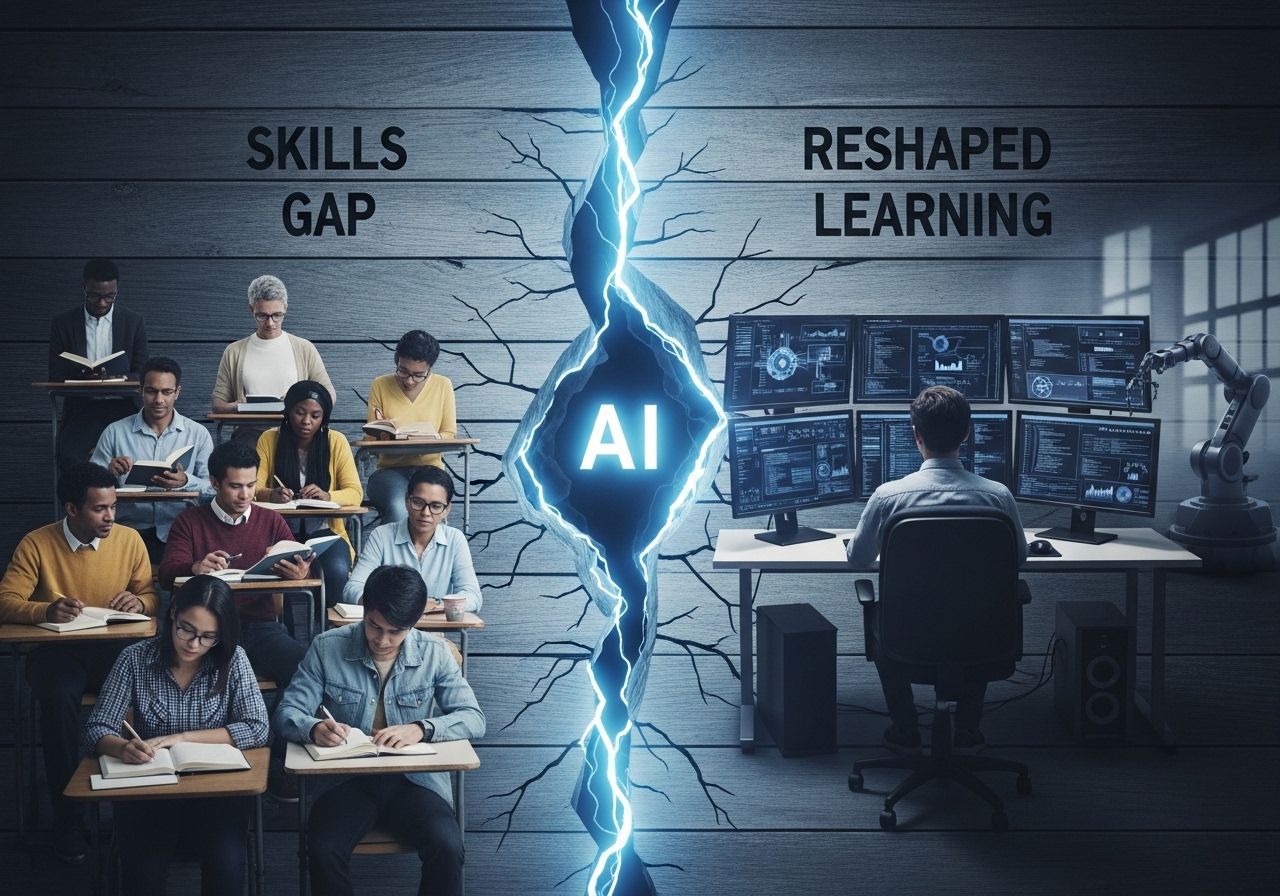
AI is both the great equalizer and the great divider in today’s workplace. While it enhances productivity, it is also widening the skills gap between those who master it and those who do not. A 2025 PwC survey found that three in four employees feel unprepared to use AI effectively in their roles.⁷
This divide is fueling inequality. Early adopters of AI tools — particularly younger, digitally fluent workers — are advancing rapidly, while mid-career professionals are at risk of obsolescence. In fields like finance, marketing, and healthcare, the ability to prompt, interpret, and refine AI outputs is becoming a baseline skill. Those without it are sidelined.
Education and training systems are scrambling to catch up. Universities are weaving AI literacy into curricula, while companies are building in-house academies. Accenture, Walmart, and JPMorgan Chase all launched AI reskilling programs in 2025. Yet the scale remains insufficient: the World Economic Forum projects that by 2030, 1 billion workers worldwide will need reskilling to adapt to AI and automation.⁸
Learning itself is being reshaped by AI. Personalized training platforms now use algorithms to adapt courses to employee skill levels. Corporate learning management systems are deploying AI tutors to coach workers in real time. This shift promises greater accessibility, but it also risks leaving behind employees who lack digital fluency.
For employers, the stakes are high. Without intervention, the AI skills gap will exacerbate inequality, fuel disengagement, and deepen turnover. Investment in training, mentorship, and transparent adoption policies is critical. For employees, the mandate is clear: continuous learning is no longer optional.
The future of work depends on whether organizations can democratize AI skills. Those who succeed will unlock new productivity and growth. Those who fail will entrench division in their workforces.