
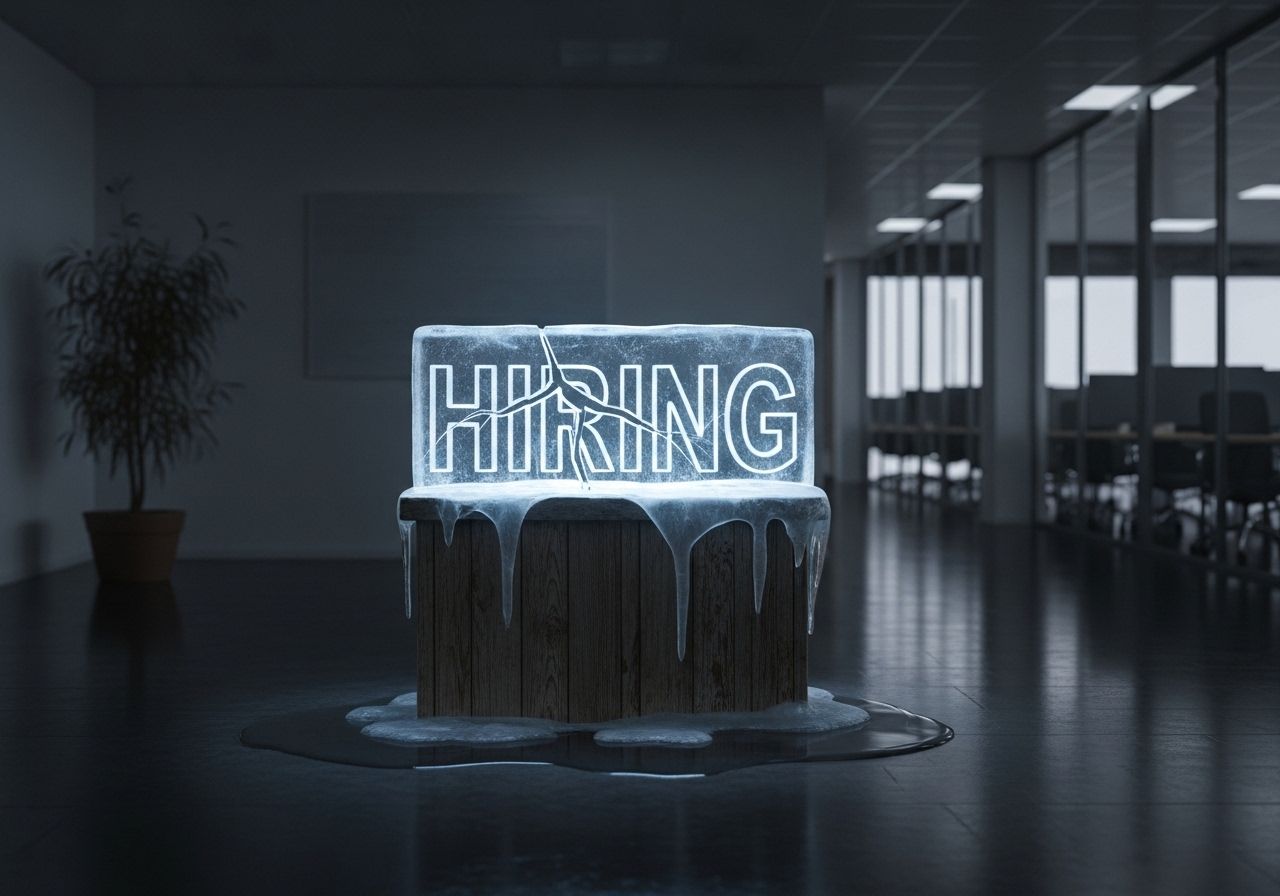
Following several years of aggressive hiring, 2026 is marked by retrenchment. Employers are consolidating, restructuring, and prioritizing efficiency over expansion. Data from Challenger, Gray & Christmas shows that job cuts in 2025 reached their highest level since the pandemic, while hiring freezes became common across industries.
The driver is twofold: economic slowdown and technological disruption. As GDP growth decelerates and unemployment ticks upward, companies are under pressure to protect margins. Simultaneously, AI-driven automation allows them to operate with fewer people. The result is a workforce strategy centered on “do more with less.”
Middle managers feel this acutely. With limited hiring budgets, managers are expected to stretch teams, absorb vacated roles, and take on new responsibilities without additional headcount. This not only increases burnout but also erodes trust. A Gartner survey revealed that 62% of managers’ report higher workloads in 2025 due to freezes or reductions in staff.
Consolidation also reshapes career progression. Fewer openings mean promotions are delayed, and lateral moves are harder to secure. In industries like tech and finance, workers are experiencing “career bottlenecks” as mobility slows. Employees accustomed to rapid advancement during the Great Resignation era are adjusting to a new normal of longer tenures and slower growth.
Employers are experimenting with alternatives to hiring. Internal mobility programs, cross-training, and redeployment are becoming more common. Companies like Microsoft and Accenture have pledged to retrain employees displaced by AI rather than cut them outright. This approach reduces churn while preserving institutional knowledge.
For employees, the message is clear: stability outweighs opportunity in 2026. Building resilience through skill development and patience is essential. For employers, the challenge is balancing efficiency with engagement. Over-reliance on freezes risks undermining morale, while proactive communication and training investments can soften the blow.
The consolidation era is not temporary. It marks a structural adjustment in how organizations scale — leaner, flatter, and more selective. Those who adapt will navigate the downturn with strength.
Source: Workplace Intelligence